
Gym & Sports Earbuds: Explaining IPX Ratings (IPX4 to IPX7 Waterproofing)
Quick Answer
|
If you want one pair of earbuds for gym, running, cycling, rain, and daily use, IPX7 is the best all-round option because it gives stronger protection against water exposure.
Bangladesh's heat, humidity, and long monsoon rainy days make IPX ratings an important factor to consider when buying earbuds. They're one of the key differences between earbuds that last two years and earbuds that die after three sweaty sessions.
For a broader overview of sound, fit, battery, features, and price, read our complete earbuds buying guide in Bangladesh.
What Are IPX Ratings?
IPX ratings are a standardized way of measuring how well a device resists water. The standard is set by the International Electrotechnical Commission, and each rating is verified through controlled lab testing.
When you see "IPX4" on a pair of earbuds, it tells you exactly what water exposure those earbuds survived in testing. The higher the number after "IPX," the more water the earbuds can handle in general. The rating doesn't expire after a set time, but repeated heavy sweat exposure and physical wear can degrade water resistance gradually over years of use.
What Does IPX Mean?
The "IP" stands for Ingress Protection. It simply means how well the device keeps things out. A standard IP rating has two numbers: the first covers dust protection, the second covers water. IPX ratings replace the dust number with an "X" because dust protection wasn't tested for that product.
So IPX4 means: dust protection not rated, water protection at level 4. Some newer earbuds use full IP ratings like IP55 or IP68. Those have both dust and water tested. IP68 means completely dust-tight (6) and submersible beyond 1 meter (8, with exact conditions set by the manufacturer). Full IP ratings offer better all-round protection than IPX ratings for outdoor and dusty environments.
IPX4 vs IPX5 vs IPX6 vs IPX7: Quick Reference
Here's what each rating actually means in real-world terms:
Each step up in the number is a significant jump, not a minor improvement:
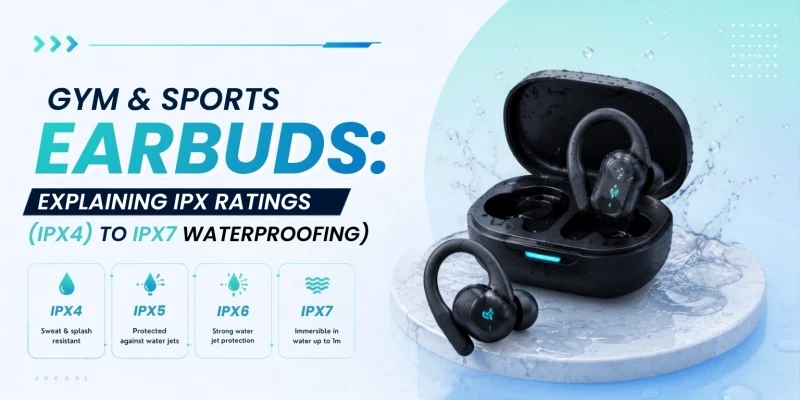
- IPX4 is splash-resistant from all directions It is also okay with sweat from your long gym workouts, a bit of drizzle, and the accidental splash from your own water bottle; Standing rain is not.
- IPX5 protects against low-pressure water jets from any direction. Heavier rain while running, intense sweat, and water splashing up from roads are covered.
- IPX6 protects against powerful water jets. Cycling in a downpour, road spray, and getting caught in monsoon rain without cover are all within IPX6's range.
- IPX7 means the earbuds survive submersion in 1 meter of water for 30 minutes. Drops in puddles, swimming pool edges, and IPX7 give stronger protection against accidental drops into water and heavy wet conditions, but users should still dry earbuds before charging.
One important note: the IPX rating applies to the earbuds only. The charging case is almost never rated. Don't leave the case in the rain, and don't submerge it.

Sweatproof vs Waterproof Earbuds
These two terms get used interchangeably in marketing, but they mean different things.
Sweatproof earbuds typically carry an IPX4 rating. They can handle body moisture from exercise, gym workouts, indoor HIIT and light jogging. They are not tested against rain or water jets. "Sweatproof" in product marketing often just means IPX4, so always check the actual rating.
Waterproof earbuds start at IPX6 and go up. They can handle direct water exposure: running in rain, cycling in heavy weather, outdoor training during monsoon. IPX7 earbuds go a step further and survive actual submersion.
For most gym users in Bangladesh, sweatproof (IPX4) is enough. For anyone training outdoors during the monsoon months, waterproof (IPX6 or IPX7) is the right choice. The price difference between IPX4 and IPX7 earbuds has shrunk considerably in recent years. IPX7 options now start at around ৳1,500.

Which IPX Rating Do You Need?
Gym Users
IPX4 is enough for gym use. Lifting weights, treadmill runs, HIIT sessions, and group fitness classes don't require more than splash protection. Your sweat can come from any direction, but it's not the same as a water jet. IPX4 handles all of it.
Don't pay extra for IPX7 if your workouts are exclusively indoors. Put that budget toward better sound, ANC, or a more secure fit instead. For most indoor gym users in Bangladesh, IPX4 is enough. You can also compare our best earbuds for gym and running based on fit, battery life, and water resistance.
Runners
Running generates heavy sweat and exposes you to rain. IPX5 is the minimum comfortable rating for anyone who runs outdoors more than occasionally. If you run outdoors in Bangladesh from June to October, IPX5 should be your floor, and IPX7 gives you more peace of mind through the worst monsoon days.
Fit matters here too. Nothing makes the best running earbuds at any IPX rating if they fall out after 3km. Do check for ear wings or hooks along with the IPX.
For running earbuds in Bangladesh, IPX5 should be the minimum if you run outdoors.
Cyclists
It is wind, rain, dirt spray, and sweat all at once in Bangladesh. Here IPX6 or IPX7 would be the right call. Downpour road spray is closer to IPX6 test coverage (high-pressure water jets from any angle) than it is for the washing specified by IPX4. IPX7 is something cyclists who might commute or train in any conditions should make a priority.
A secure, over-ear hook design is as important as the IPX rating. Earbuds that shift position during a long ride become a distraction and a safety issue. For cycling earbuds in Bangladesh, IPX6 or IPX7 is safer because of rain, sweat, and road spray
Outdoor Users
Hiking, trekking, and general outdoor fitness in Bangladesh have unpredictable weather. The monsoon is genuinely extreme. IPX7 earbuds with a secure fit design are the right combination. Don't assume you can outrun the rain in the Chittagong Hills or Sylhet.
For outdoor use, also check whether the product has a full IP rating with dust protection. Dusty trails affect non-rated earbuds differently than rain does, and a full IP55 or IP68 rating covers both.
Are IPX4 Earbuds Enough for Bangladesh?
For purely indoor use, yes. For outdoor use, the honest answer is: not during peak monsoon.Bangladesh receives some of the heaviest seasonal rainfall in South Asia. Average monthly rainfall in Dhaka during July can exceed 300mm, and parts of Sylhet and Chittagong get significantly more. "Splashing water from any direction" — which is what IPX4 tests — is not the same as walking, running, or cycling through that kind of sustained rainfall.
IPX5 handles low-pressure water jets. IPX6 handles high-pressure jets. If you train outdoors during the rainy season, IPX5 is the minimum, and IPX7 is the safer pick. For the gym, IPX4 is perfectly adequate and saves money.
IPX4 earbuds in Bangladesh are fine for indoor use, but they are not the best choice for monsoon-season outdoor workouts.

Common Mistakes People Make When Buying Workout Earbuds
Choosing by IPX rating without checking fit. An IPX7 earbud that falls out of your ears on the second lap is still a bad workout earbud. Always check whether the earbuds have ear hooks, or a design known to stay secure during movement before the IPX number.
Assuming the charging case is also waterproof. The IPX rating almost always covers the earbuds only. The charging case is usually not rated at all. Leaving the case in the rain or submerging it can damage the charging contacts and ruin earbuds that were otherwise fine.
Using IPX4 earbuds through Bangladesh's monsoon. IPX4 earbuds handle splashes, not sustained rainfall. July and August in Bangladesh involve hours of heavy rain at a time. If you train outdoors during these months, you should get at least IPX5, or IPX7 for complete reliability.
Cleaning earbuds with soap or alcohol wipes. A hydrophobic coating on the housing and sealed seams help improve IPX water resistance. Over time, soap and alcohol can break down this coating and lead to decreased water resistance. Wash off with plain water and dry out with a soft cotton cloth. Use the correct method to clean earbuds safely without damaging the coating, mesh, or charging contacts.
Charging while wet. The charging port is the most common point of failure in waterproof earbuds. After a wet workout or a rinse, let the earbuds dry completely before placing them in the case or connecting them to power. Five minutes of patience can prevent a short circuit. Proper drying, charging, and storage can also help make earbud batteries last longer.

Best Gym & Sports Earbuds in Bangladesh
Here are the best options currently available in Bangladesh by budget, with confirmed IPX ratings. Prices are approximate and may vary by retailer.
Budget buyers can also compare QCY, Oraimo and CMF earbuds before choosing a brand. Before ordering, learn how to spot fake earbuds in Bangladesh and check the seller, packaging, serial details, and warranty.
Where to Buy in Bangladesh
When buying sports earbuds in Bangladesh, check three things before price: IPX rating, fit type, and warranty. SMS Gadget offers several gym and sports earbuds across budget, mid-range, and premium categories, including IPX4, IPX5, IPX7, and full IP-rated options. Always confirm current stock, price, and warranty before ordering.
Frequently Asked Questions
Q1: What do IPX ratings mean?
IPX ratings tell you how well earbuds are protected against water. IP is for Ingress Protection, while the number that follows indicates how protected it is from water: IPX4 handles splashing, IPX5 handles water jets, IPX6 handles powerful jets, and IPX7 means the earbuds can be submerged in 1 meter of water for 30 minutes.
Q2: Is IPX4 enough for gym workouts?
Yes, for indoor gym use. IPX4 covers sweat and splashing water from any direction, which covers everything that happens during gym sessions like lifting, treadmills, HIIT, and fitness classes. If your gym use is strictly indoors, IPX4 is all you need.
Q3: Are earbuds truly waterproof when they have an IPX7 rating?
IPX7 technology: Eardrums get wet and can be submerged to 1 meter underwater for no more than 30 minutes according to specifications in the test environment. That means that most average everyday use cases are fully waterproof, including actual rain showers, an accidental drop in a shallow puddle somewhere, and maybe those times you get caught right away in the downpour outside during your outdoor workout. A dry charging case, presumably unrated and best left so.
Q4: Can IPX7 earbuds be used in the shower?
Technically, IPX7-rated earbuds can be used in the shower as well! The soap, shampoo and conditioner will slowly strip away the waxy coating that allows water to bead and run off. Most manufacturers advise against this. If you need to wash them, please rinse with clean water only and dry thoroughly before charging.
Q5: Can sweat damage earbuds without an IPX rating?
Yes. Sweat also contains salt and acids that speed up electronic corrosion, making it more harmful than clean water. There is no moisture testing of earbuds without any IPX rating. Even if not open, just occasional use will create internal corrosion over time. Always look for an IP rating higher than 4 before purchasing earbuds to use for any workout.
Q6: Which IPX rating is best for running in Bangladesh?
IPX5 at a minimum, IPX7 if you run outside year-round. For example, the extreme and continued heavy precipitation of storms moving toward Bangladesh is well over what IPX4 is rated for. As long as you run outside from June to October, IPX5 to IPX7 will keep your earbuds safe. If you're running indoors or during dry months, in the early morning, IPX4 is fine
Q7: Which IPX rating is best for Bangladesh weather?
IPX6 or IPX7 for outdoor use during the monsoon season (June to October). Bangladesh receives extremely heavy rainfall during this period — one of the highest seasonal rainfalls in South Asia. IPX4 and IPX5 are fine for the drier months and indoor use year-round. If you want one pair that works through all seasons outdoors, IPX7 is the safest choice.
Q8: Are waterproof earbuds worth buying?
If you exercise regularly, yes. The cost difference between IPX4 and IPX7 earbuds has narrowed considerably. The Anker Soundcore Sport X10, for example, offers IPX7 protection at ৳6,490. Earbuds without water resistance that die from sweat damage cost more in the long run than paying a bit more upfront for proper protection.
Q9: Is IP68 better than IPX7?
Yes. IP68 is a full IP rating with both dust and water protection tested. The "6" means completely dust-tight. The "8" means it can be submerged beyond 1 meter;the exact depth and duration is specified by the manufacturer. IPX7 has no dust rating and is limited to 1 meter for 30 minutes. For earbuds, IP68 offers better all-round protection, especially in dusty outdoor environments.
Q10: Can I wash my earbuds with water?
IPX5 and above earbuds can be rinsed with clean water. IPX7 earbuds can handle more thorough rinsing. Never use soap or cleaning liquids — these degrade the water-resistant coating. After rinsing, dry the earbuds thoroughly with a soft cloth before putting them in the case or charging them. Water in the charging port is a common cause of damage.
Q11: Does waterproofing affect sound quality?
Not significantly in modern earbuds. Waterproofing requires the housing to be sealed more thoroughly, which slightly affects acoustic design. In cheap earbuds, this can slightly reduce sound quality. In well-engineered earbuds like the Anker Sport X10 or Sony WF-C700N, the acoustic design accounts for the sealed housing and the sound quality is not compromised.
Q12: How long do waterproof earbuds last?
Because rated versus non-rated earbuds are typically made with tighter tolerances and more moisture-friendly materials, IPX-rated earbuds usually offer a longer life in workout use. There is no expiration for the IPX rating, but repeated exposure to sweat, UV and physical wear might reduce that hydrophobic coating over time. By rinsing after especially sweaty sessions and letting them dry out, they last a ton longer.
Disclaimer: Prices are estimates and might change. To check the current stock and pricing,