
iPhone 17 Pro Max vs Samsung Galaxy S26 Ultra — Camera, Battery & Performance Compared
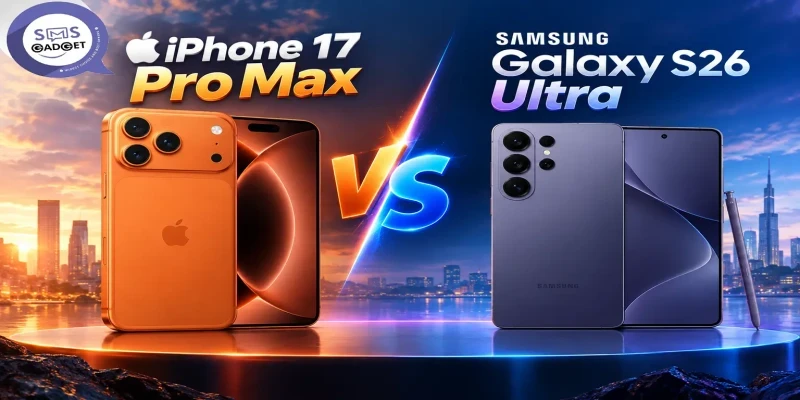
The iPhone 17 Pro Max and Samsung Galaxy S26 Ultra sit at the top of their game right now. Both cost over a thousand dollars. Both pack the newest chip from their brand. So the question isn't which one looks better on paper.
You want to know how they actually perform camera, battery, speed, real use. Here's a pattern you'll notice throughout this piece. Samsung usually wins the big numbers. Apple usually wins the long game. But reviewers don't always agree, and we'll show you exactly where they clash.
Camera Comparison — What Multiple Independent Tests Actually Show
Both phones take great photos. But dig into the tests, and you'll see two very different styles at work.
Main Camera in Daylight — Sharper vs Brighter
CrackTheCable and GSMArena both tested this, and both found the same thing. The iPhone captures sharper photos with more fine detail. The Galaxy's photos look brighter at first glance. But zoom in, and you lose some of that detail. Neither one is wrong here. It's just a different style.
Low Light — Where Reviewers Disagree
This is where testers actually clash. One lab test scored Samsung's low-light photos higher, 94 versus 86, thanks to its bigger sensor and cleaner shadows. But GSMArena's hands-on test found something different. At normal zoom, both phones looked similar. Zoom to 2x, though, and the iPhone came out sharper. So which one wins? Depends on you. Do you just glance at your photos, or do you zoom in and check every detail?
Zoom and Telephoto — Not as One-Sided as It Looks
Samsung's camera zooms to 10x. The iPhone maxes out at 8x. In bright daylight, that extra zoom helps Samsung. But indoors, in dim light, the iPhone actually does better at the same zoom level. Apple grew its telephoto sensor by 56% this year a real jump from past models, when Samsung used to win zoom comparisons easily.
Video Recording
The iPhone stays smooth and steady, great for casual videos and social posts. Samsung gives you more control log recording, manual ISO, custom color profiles. One's built for ease. The other's built for editors.
Portrait Mode
Samsung's Virtual Reflector lets you adjust lighting creatively. The iPhone keeps things natural by default. Just two different looks.
The Honest Camera Verdict
Neither phone clearly wins. Your choice depends on how you shoot, and how closely you look at your photos after.
Battery Life — Real Testing vs What the Spec Sheet Implies
Numbers on paper don't always tell the real story. Let's see what actual testing shows.
The Capacity Numbers Are Close, and So Is Real Runtime
Samsung packs a 5,000mAh battery. Apple's iPhone comes close, around 5,088mAh (some sources list it a bit lower). On paper, they're almost the same. Real testing backs that up too. In head-to-head runtime tests, the iPhone actually lasted about 30 minutes longer than the Galaxy. That's surprising, since Samsung usually gets the "battery king" label in spec-sheet talk. Turns out, real use tells a different story.
Thermal Behavior During Testing — A Point Nobody Talks About
Here's something interesting. Both phones stayed cool during battery and gaming stress tests. Neither one overheated or ran hot like some other flagships do. This isn't a win for one brand. It's a shared strength, and it matters more than people think.
Charging Speed — A Clear Samsung Win
This one's simple. Samsung charges faster. Its 60W charger gets you to 75% in just 30 minutes. Apple's 40W charger can't match that speed. Every test agrees here. No conflicting results, no "it depends." Samsung wins charging, plain and simple.
Battery Life — The Honest Verdict
Don't pick your phone based on the mAh number alone. Real-world battery life? Basically a tie. What actually separates these two is charging speed, and that's where Samsung pulls ahead for good.
Performance — Peak Power vs Sustained Power
Speed on paper is one thing. Speed after an hour of gaming is another. Here's how these two really compare.
Peak Benchmark Numbers Favor Samsung
Samsung's Snapdragon chip wins the numbers game. It scores higher on Geekbench and 3DMark's peak graphics test. It also hits a record clock speed and pushes more memory bandwidth. But here's what "peak" actually means. It's the phone's best possible burst, for a few seconds. Not what happens after that.
Sustained Performance Favors Apple — With Real Numbers
This is where the iPhone pulls ahead. After a long stress test, it holds onto a much bigger chunk of its peak power than Samsung does. Why? Apple's vapor chamber cooling is bigger this year. The clearest proof comes from 3DMark's "lowest loop" test. Samsung starts strong, but its score drops fast after repeated loops. The iPhone barely dips. That gap says a lot.
What This Means for Gaming
Playing something short and intense? Samsung's raw speed shows up. Playing for hours, like a long Genshin Impact or Diablo Immortal session? The iPhone stays steady while Samsung slows down. Match this to how you actually play.
RAM and Multitasking
Samsung offers a 16GB RAM option. Apple sticks with 12GB, no upgrade choice. If you run multiple AI tools or juggle heavy apps at once, that extra RAM actually helps.
The Honest Performance Verdict
Samsung wins the sprint. Apple wins the marathon. Pick based on how you play, and whether extra RAM headroom matters to you.
Putting It All Together — The Pattern That Connects All Three
Samsung keeps winning the headline numbers brighter photos, higher benchmarks, and faster charging. Apple keeps winning where it counts over time sharper detail, cooler performance, steady battery life. It's not random. It shows up in every category we covered.
Here's the pattern laid out simply:
Which Matters More for You?
Numbers and patterns are great, but let's make this personal. Which one actually fits your life?
If You Value Peak Numbers and Flexibility
Do you game in short bursts, then put your phone down? Do you shoot photos casually, where a brighter shot matters more than pixel-perfect detail? Do you hate waiting around for your phone to charge?
If yes, Samsung fits you better. You'll get the raw speed you want in quick sessions. Your casual photos will look punchy and bright straight out of the camera. And you'll spend way less time plugged into a wall.
If You Value Consistency Over Time
Now, do you play games for hours at a stretch? Do you edit videos or zoom deep into your photos to check every detail? Do you want a phone that just performs the same, day after day, without thinking about it?
If that's you, the iPhone makes more sense. It won't slow down a mid-marathon gaming session. Your photos will hold their detail even under close inspection. And daily performance stays steady, no surprises.
Final Thoughts
Neither phone sweeps every category. It's the same story throughout: Samsung wins the peak moments, Apple wins the long haul. Camera, battery, chipset the pattern holds up everywhere.
But camera and performance aren't everything. Design, display, software, and price matter too. Check out our full "Which One Is Worth Buying" guide for that complete picture. If price is a big factor for you, it's worth checking where each phone currently stands see our iPhone 17 Pro Max price breakdown and Samsung S26 Ultra price guide before you decide.
For now, the real advice is don't chase a single "winner" number. Think about how you actually use your phone quick bursts or long sessions and let that decide.
Frequently Asked Questions
It depends on how you look at the photo. Lab tests give Samsung the edge, with a score of 94 versus 86, thanks to its bigger sensor and cleaner shadows. But hands-on testing from GSMArena found something different. At normal zoom, both phones look about the same. Zoom in to 2x, and the iPhone actually looks sharper. So if you check every detail, the iPhone might surprise you.
They're nearly tied. In real runtime testing, the iPhone actually lasted about 30 minutes longer than the Galaxy. That's surprising, since Samsung usually gets credit as the battery champion. Day to day, though, you likely won't notice much difference between the two.
Samsung, no question. Its 60W charger gets you to 75% battery in just 30 minutes. Apple's 40W charger takes noticeably longer to hit the same mark. This is one of the clearest wins in the entire comparison.
The iPhone holds up better over time. After extended stress testing, it keeps a bigger share of its peak performance than the Galaxy does. Samsung's chip runs faster in short bursts, but it slows down more as sessions stretch on. For marathon gaming, the iPhone stays more consistent.
Yes, if you push your phone hard. Samsung's 16GB RAM option (versus Apple's fixed 12GB) helps when you're running multiple AI tools or juggling several heavy apps at once. For everyday use, most people won't notice the gap. But power users will feel it.